


Secret NERDBASE
Administrator




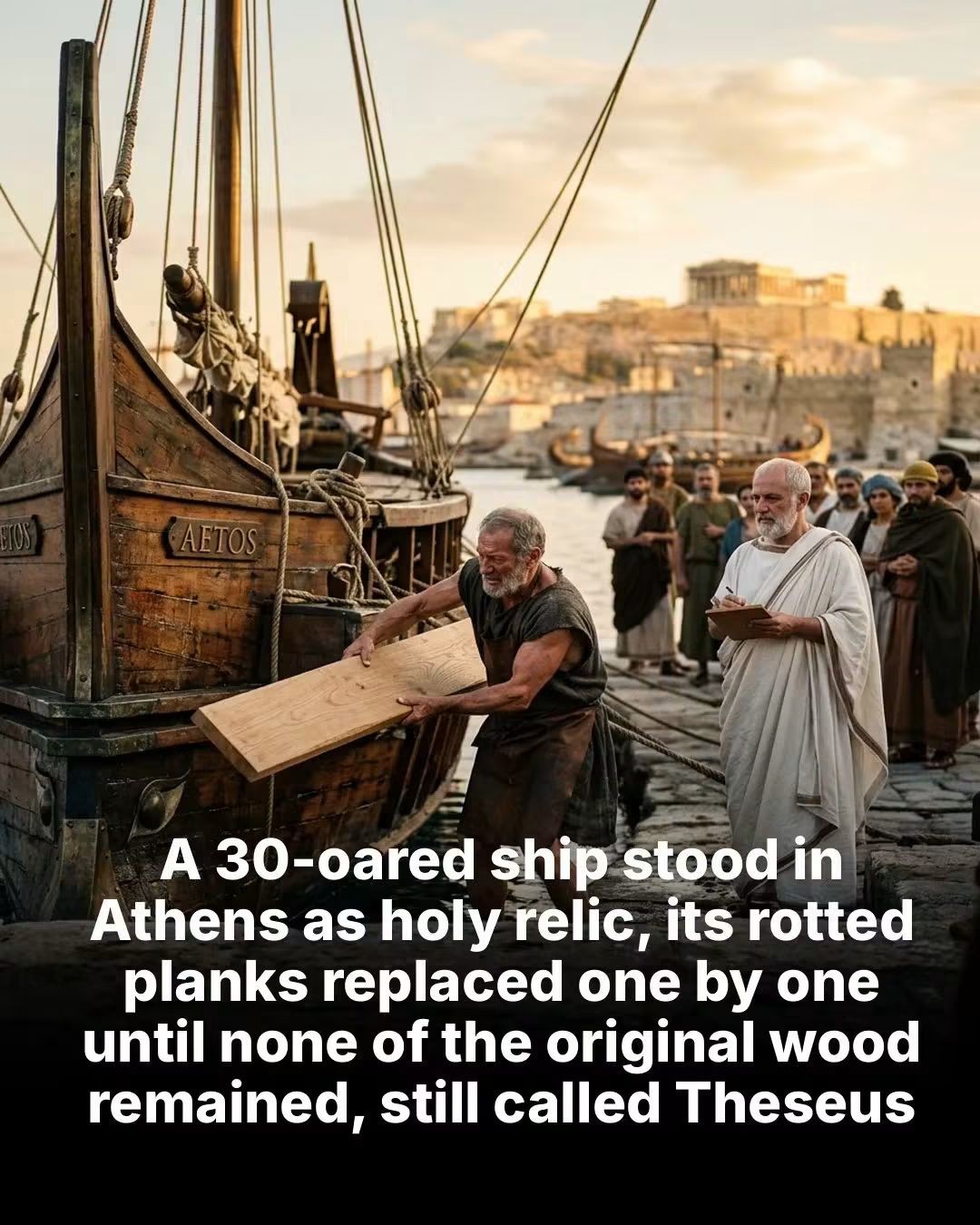
Athenians kept worshipping a ship that no longer held a single original plank.
Plutarch recorded the story in his Life of Theseus around 75 AD. He says Athenians preserved the vessel into the era of Demetrius Phalereus, who governed Athens from 317 to 307 BC.
Plutarch describes a 30-oared ship displayed in the Athenian harbor as a civic relic.
Philosophers used that display as a paradox about identity, continuity, and change. The argument was about what same actually means.
Heraclitus argued for constant flux, while Hobbes later imagined a second ship rebuilt from the old planks in De Corpore, 1655, creating two claimants to origin. The physical truth of the original vessel remains uncertain.
The Ship of Theseus now frames debates about bodies, nations, and institutions, forcing us to confront what we lose when we insist something endures.